Entry · Ref KSKMLVKK
Expert Tree Removal for Estates: Safety, Planning, and Aftercare
- Posted
- 2026-10-09
- Last amended
- 2026-10-09
- Account
- @treeremovalestateslife
Managing an estate in Cape Town comes with its own set of responsibilities, and large trees are often a central part of the landscape. They provide shade, character, and habitat, but they can also become a serious liability. When a mature tree is diseased, storm-damaged, or simply outgrowing its space, the decision to remove it is rarely simple. Estate managers and homeowners need a clear understanding of what professional tree removal for estates involves, from the initial inspection through to final landscape restoration.
I have worked on properties where a single oak or pine dominated the view, and its removal changed the entire feel of the grounds. That kind of job requires more than just a chainsaw and a strong back. It demands careful planning, the right equipment, and a team that knows how to work around existing structures, gardens, and access routes. The stakes are higher on an estate because the tree is often part of a larger ecosystem, and the removal process can affect the soil, nearby plants, and even the drainage patterns of the land.
Why Professional Assessment Matters
The first step in any significant removal is a thorough site inspection. An experienced arborist will examine the tree species, measure its height and spread, and assess the condition of the trunk and root system. They will also look at the surrounding area: where the tree stands relative to buildings, walls, pathways, and utility lines. On an estate, there might be outbuildings, swimming pools, or formal gardens that complicate access. The arborist needs to determine the safest direction for the tree to fall, or whether a sectional dismantle is necessary because the fall zone is too restricted for a straight felling.
During one inspection on a large property in Constantia, we found that a massive stone pine had a hidden cavity near the base. The tree looked healthy from a distance, but a closer look revealed decay that made it unpredictable. That kind of detail only comes from a proper inspection. Skipping this step can lead to a tree splitting unexpectedly during removal, which is dangerous and expensive to fix.
Planning the Removal Process
Once the assessment is complete, the team develops a removal plan. This includes selecting the right equipment. For tall trees in tight spaces, a bucket truck or crane removal might be the only safe option. Crane removal allows the arborist to lift sections of the tree away from the ground, reducing the risk of damage to the surrounding area. On other estates, where there is more open space, a straight felling with a chainsaw might be possible, but only if the fall zone is clear and the wind conditions are right.
Heavy machinery often plays a role as well. A stump grinder is used to remove the stump below ground level, which is important for replanting or preventing regrowth. On some jobs, a wood chipper processes the branches and smaller limbs into mulch, which can be reused on the property. This reduces the volume of debris that needs to be hauled away and can be a cost-effective part of debris disposal.
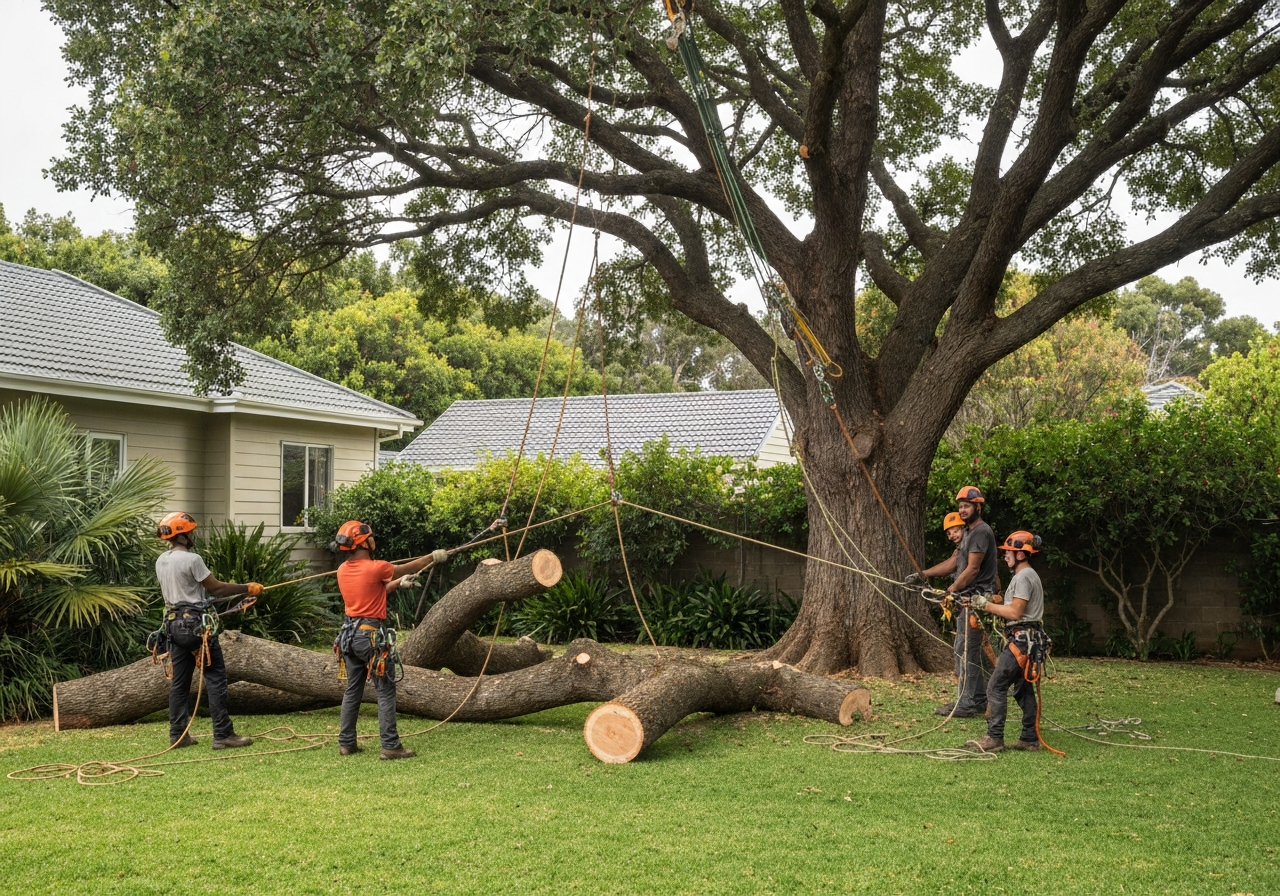
Safety is non-negotiable. Every person on site wears a safety harness when working at height. Ropes and rigging systems are used to lower large limbs rather than letting them drop. The team also checks for any overhead power lines, which require special clearance from the utility company. In Cape Town, some species are protected, and a tree felling licence may be required before any work begins. That is something an experienced contractor will handle on behalf of the client, but the estate manager should always ask about permits before the job starts.
Property Clearance and Aftercare
Removing a large tree leaves a hole in the landscape, both literally and visually. Property clearance after the main removal is about more than just sweeping up sawdust. It involves grinding the stump, levelling the ground, and restoring any turf or planting that was disturbed during the operation. Many contractors offer landscape restoration as part of the service, which can include reseeding grass, planting new shrubs, or installing a small garden bed where the tree once stood.
I have seen estates where the removal of a single tree opened up a view of the mountain that had been hidden for decades. The owners were delighted, but the bare patch of earth still needed attention. We brought in topsoil, levelled the area, and planted a mix of indigenous groundcovers that thrived in the sun that now reached the ground. That kind of follow-up makes the difference between a removal that looks like a scar and one that feels like an improvement.
The root system can also cause issues after the tree is gone. Large roots left to rot in the soil can create hollows that attract pests or cause the ground to settle unevenly. Proper stump grinding removes the bulk of the root mass below grade, and the arborist can advise on whether any additional soil stabilisation is needed. On some estates, the roots may have extended under a driveway or wall, and their removal requires careful excavation to avoid destabilising those structures.
Practical Considerations for Estate Managers
Managing tree removal for estates involves coordinating multiple aspects of the property. You need to think about timing: tree surgery and removal are best done during the dormant season for many species, but an emergency removal after a storm cannot wait. You also need to consider the impact on residents and staff. A large removal can block access roads for a day or two, so planning the work around deliveries and guest arrivals is important.
Budget is another factor. The cost of removal depends on the tree species, its size, its location relative to structures, and the complexity of the access. A straight felling in an open field costs much less than a crane removal over a pool. But skimping on safety or equipment is never worth the risk. A professional contractor will give a clear quote after the site inspection, and they should be able to explain the line items so you understand what you are paying for.
Estate management also means thinking about the long-term health of the remaining trees. A removal can change the wind patterns on the property, leaving other trees more exposed. It can also alter the amount of sunlight reaching the ground, which affects the understorey plants. A good arborist will offer advice on how to manage these changes, including pruning of nearby trees to balance the canopy and reduce the risk of windthrow.
Choosing the Right Contractor
Not all tree removal companies are equipped to handle the demands of an estate. Look for a team that has experience with large trees, proper insurance, and a track record of safe work. They should be willing to show you their tree felling licence and proof of insurance. They should also be able to provide references from similar properties in Cape Town. A company that specialises in tree removal for estates will understand the need for minimal disruption, careful cleanup, and respectful communication with the property owner or manager.
During the job, expect the team to cordon off the work area, protect nearby plants with temporary barriers, and clean up thoroughly at the end of each day. Debris disposal should be included in the contract, whether that means chipping, hauling away, or leaving firewood for the estate. Some contractors offer a full service that includes stump grinding, leveling, and even new planting. That can be worth the investment if you want the area to look finished as quickly as possible.
In my experience, the best outcomes come from clear communication. The contractor should explain the plan, the risks, and the timeline before the first cut is made. They should also be open to adjustments if conditions change, such as unexpected wind or a hidden power line. A good team will treat your property with the same care they would want for their own home.
Tree removal for estates is not a routine job. It requires judgment, skill, and the right equipment. But with proper planning and a professional contractor, the result can be a safer, more beautiful property that is better suited to its current use. Whether you are clearing space for a new building, removing a hazard, or simply refreshing the landscape, the process can be managed smoothly and safely. The key is to start with a thorough site inspection, choose a team that understands the unique demands of estate work, and follow through with proper aftercare. That approach turns a potentially disruptive event into a manageable project that adds long-term value to the property.